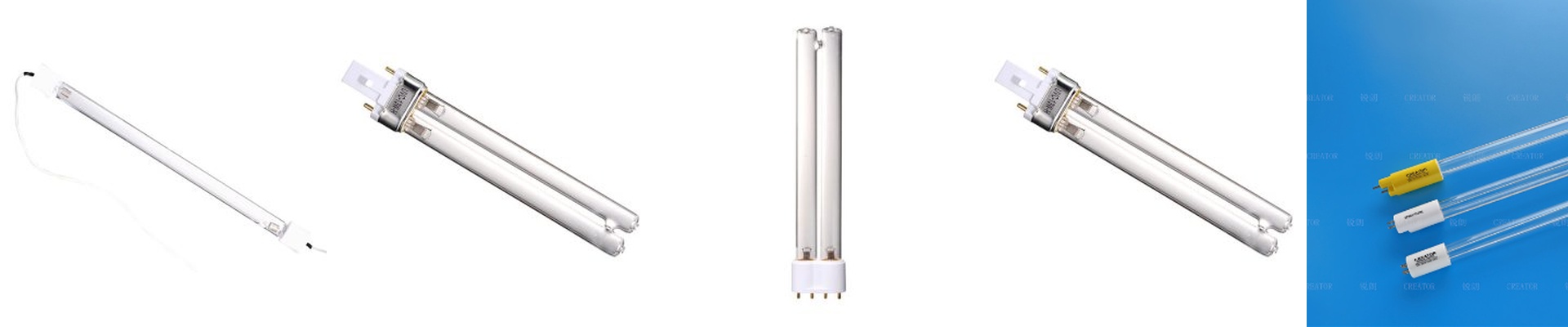
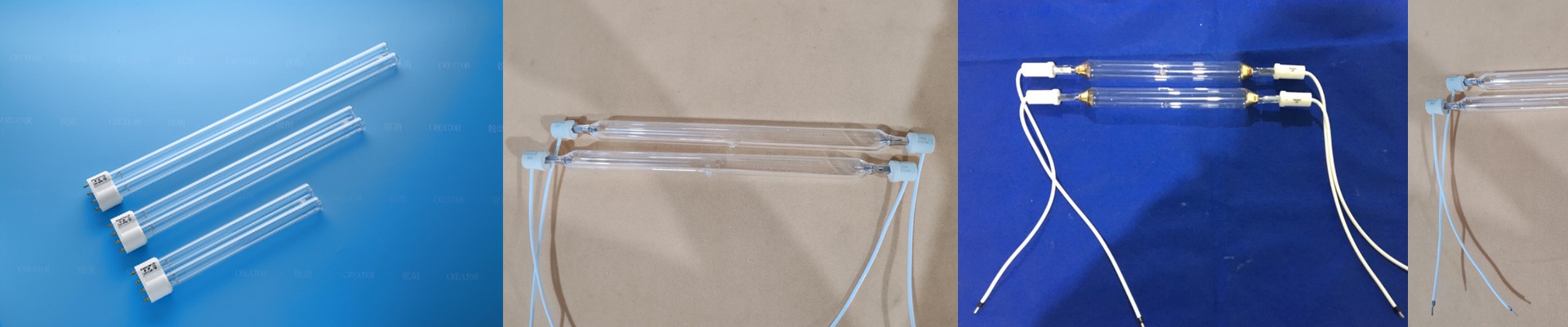
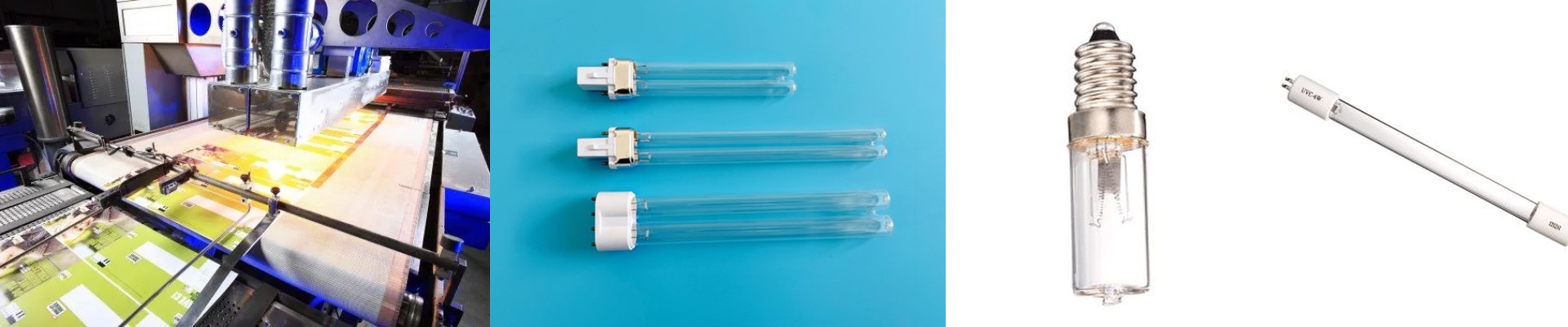
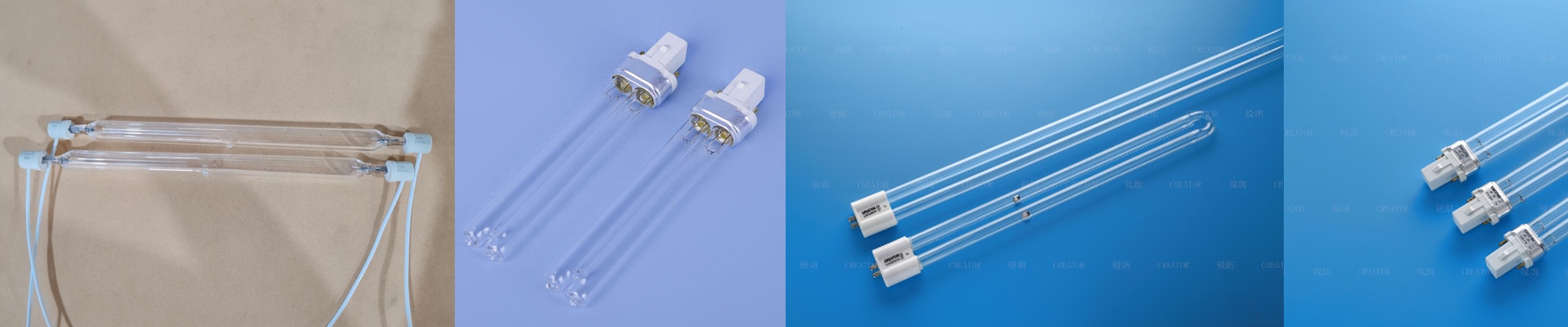
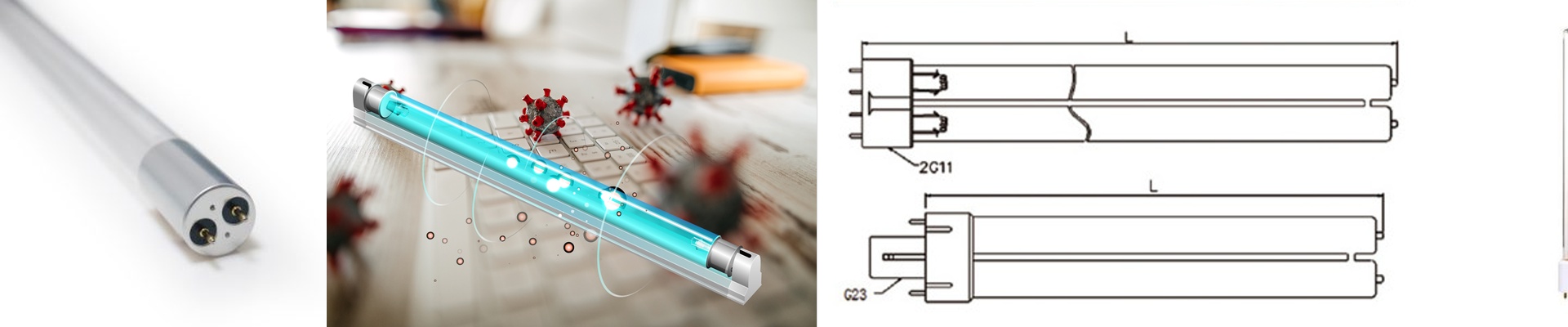
On the press floor, a mercury UV lamp doesn’t blow up when it’s going bad. It just gets quiet—output drifts down, and you start seeing ink that stays tacky, scumming, and scrap climbing while you chase cure settings that never seem to stick. The only way to stop that drift from turning into downtime is to monitor output with numbers, not vibes. A simple UV energy test strip gives you that day-to-day reality check on what the lamp is actually delivering.
What matters, technically
Industrial mercury UV bulbs are built around predictable spectral output and stable peak irradiance across the curing band. In the real world, the 365 nm line does the heavy lifting for photoinitiator activation in a lot of offset, flexo, and screen inks, while 385 nm and 405 nm help you get through thicker deposits and pigmented formulations. “Output” isn’t some vague idea of brightness. It’s energy density—mJ/cm²—delivered at a defined lamp-to-substrate gap. Over time, electrode wear, mercury depletion, and reflector degradation chip away at irradiance long before the lamp hits its end-of-life. A spectral radiometer gives you the exact number; a UV energy test strip gives you a fast, repeatable field check that lines up with what you see in cure.
Why this works in practice
Run periodic energy checks with UV test strips and you turn maintenance into something you can control instead of guessing. Set a baseline for your lamp at a fixed distance and speed, then test on a schedule. When the trend starts dropping—showing up as weaker or uneven cure at the same settings—you’ve got an early warning. That’s when you check reflector alignment, confirm lamp positioning, and make sure the arc is stable, before the defects hit the sheet. You keep the cure window consistent, cut unplanned stops, and stretch lamp life by keeping it out of run-to-failure territory.
The details that keep it honest
UV energy test strips are sensitive to distance, angle, and ambient heat, so measure at the same geometry you run in production. Mercury lamps also have a warm-up curve—irradiance only settles after a short operating period, so test after the lamp reaches steady state. Expect output to fall as the lamp ages, and schedule replacements around measured performance, not a calendar date. And here’s the catch with high-pressure mercury lamps: they throw off significant IR, so thermal management and proper reflector spacing are non-negotiable. If you don’t manage heat, you risk substrate damage and you lose repeatability.